
Why I Left Google

One year ago today, I handed in my resignation at Google.
On that day, Google’s stock was at $177. I had modeled the opportunity cost of my unvested stock within $20 of that number. By my last day in mid-October, the price was north of $250.
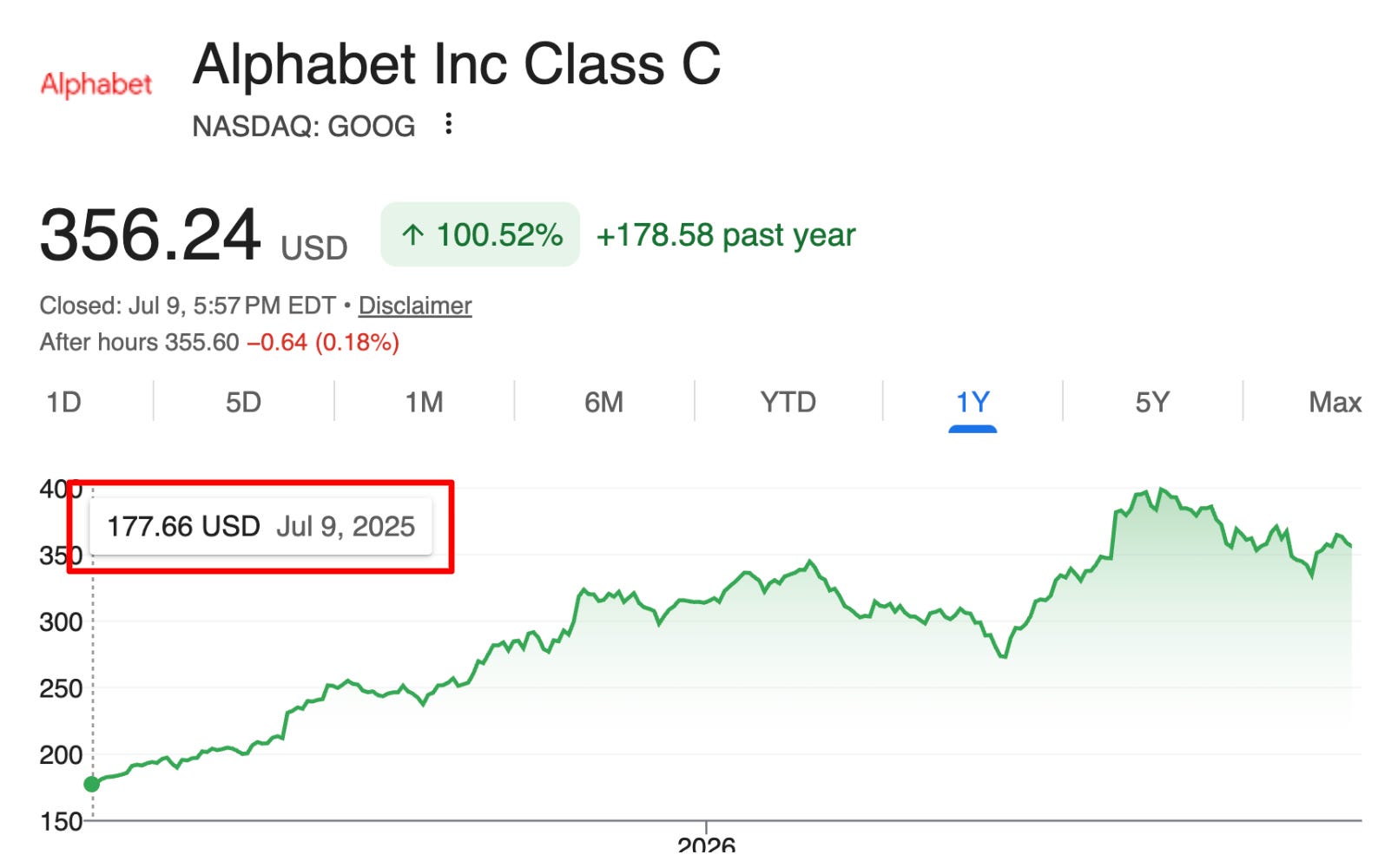
That number was one of many reasons leaving Google wasn’t easy. Besides that, there were thirteen years of friends, mentors, and sponsors I could still call anytime. I got to wake up every day and work on YouTube, a product I along with a billion people used everyday. And it was THE company (outside of the labs) to work at if you cared about AI. I thought I was insane to leave. A lot of people still think I am, and they ask me about it.
So here’s the actual story.
My career coach once told me I sounded like I was having an affair with my work. I’d been telling her about the AI building I was doing on the side, before my family woke up, on vacations, in the gaps between meetings. Less a hobby, she said, more a fling I couldn’t stop thinking about.
The thing I actually wanted to do
I’d reached the point in my career where growth meant promotion, and promotion meant more stakeholder management, more meetings, more time spent negotiating who owned what. I kept chasing it. I kept getting it (with the right combination of luck + timing). And every time, I felt less clear on why I wanted the next one.
So I asked myself what actually motivated and energized me. I noticed I’d rather spend four hours nerding out about which signals to add to a ML model to improve its recall (AI hasn’t replaced ML, by the way) than fifteen minutes figuring out how to gently influence another team into giving us a seat at the table.
What energized me wasn’t new. Back in 2014, I was on Google’s Trust and Safety team, building an early spam detection model with logistic regression and random forest in R (remember that language?). What I couldn’t stop thinking about back then was the problem underneath the work: Why had we accepted boring, repetitive tasks as just part of the job? Could we teach a machine to make the same judgment calls a person would, notice the same signals, and free us up for the things that actually needed a human?
That’s the exact feeling I’ve been chasing since.
When I got my first real taste of ChatGPT, I recognized the same obsession forming again. AI could now handle far more qualitative, ambiguous input than anything we had in 2012. But the underlying question hadn’t changed: which trivial decisions were we burning time on that a machine could handle at scale, so we could focus on the ones that actually mattered? So I started small and close to home: could AI take over the awfully boring rhythm of family meal prep? Could it handle the repetitive reporting eating up my work week? Could it remember the hundred tiny things I was tracking as a parent and quietly run my family’s calendar in the background?
It was the same theme but with sharper instruments.
This is the part I want to be honest about. Waking up before my family did, building on vacation, none of that was discipline. It was obsession. I couldn’t stop thinking about the problem, so I kept going back to it.
And that obsession happened to land at a useful moment. When a discipline is brand new, the roles haven’t separated yet. In 2014, a teammate and I did the data labeling, trained the model, ran the evals, and did the feature engineering, because each one made the prediction better and there was no one else to hand it to. I noticed the same thing with AI. Some of the early harnesses we were duct-taping together on the side are now standard features in the tools everyone uses. It was exhilarating to see labs ship little projects you’d been building over the weekend.
It’s a rare thing when the work you’d do for free is also the work about to be in high demand.
The role that didn’t exist yet
The building part was fun. I / my family was benefiting from my small projects. But without real user feedback, each project one by one started to hit a wall. The best learnings come from seeing how things break because other people use your product in ways you never would.
So I was wondering if my “hobby” / side hustle / obsession can become a full time job? One where I could build and ship to real users. Turned out that job didn’t exist, not cleanly
When I told hiring managers and mentors what I wanted to do, they’d ask: “So you want to be a software engineer?” No, I’d say. I opened a terminal for the first time six months ago. I can have AI write code, but I’m not a software engineer. Data scientist roles missed too. That still wasn’t building and shipping AI products.
I explored PM opportunities, but PM is a brutally hard role to crack at Google. Thousands of people in a group chat trying to break in. Sponsors, rotations, eighteen months of process, no guaranteed outcome. My mentor put it plainly: “Without prior product experience, you have no real advantage. We might as well hire a new MBA grad.”
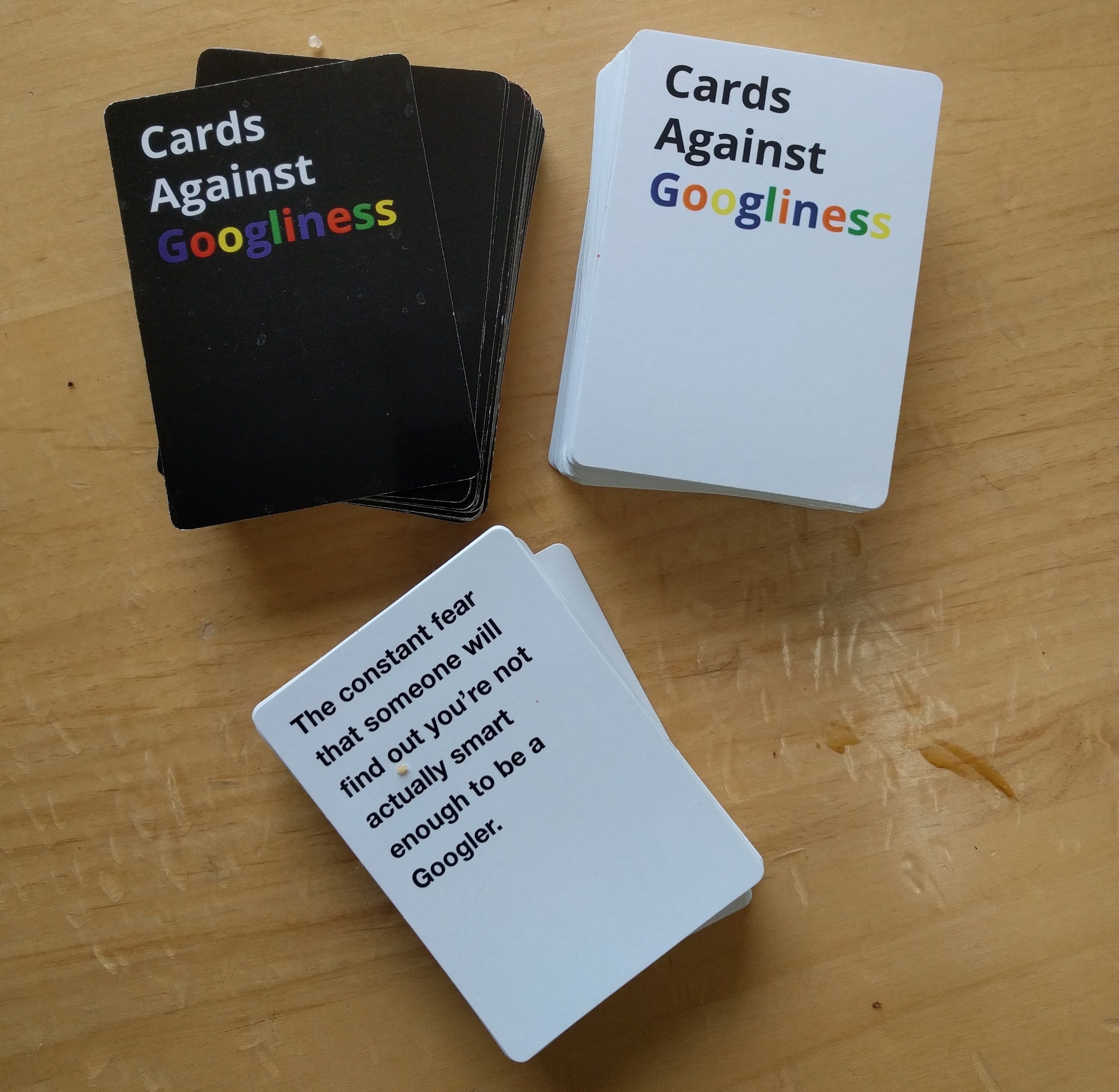
There wasn’t a lane yet for someone who wanted to build AI products directly, using everything I already knew, without folding it into someone else’s job description.
That’s not a knock on Google. The whole industry was, and honestly still is, trying to figure out what this role even looks like. I just knew that staying somewhere I couldn’t do this full time meant standing still while the field moved past me.
So I applied to early AI teams being stood up inside finance and analytics orgs, both inside and outside Google. Three interviews, one offer. And that one offer was a role where ninety percent of the job was what I’d already done for twelve years, with maybe ten or twenty percent set aside for tinkering with AI on the side. The two roles I didn’t get went to candidates with marginally more AI experience than me. That was the proof I needed.
Making the leap
Was it an easy decision? No.
A few things gave me the nerve. I’d started writing publicly about what I was building, and people kept introducing me to other AI startups and teams. It was exhilirating to talk about common challenges with other folks on similar journey. I wanted more of that. At an internal hackathon at Google, I met an engineer who was a terrific sounding board and gave me the confidence that I could actually build a product. Also I wasn’t the only one being a little reckless. A few friends left their own comfortable jobs around the same time to build something of their own. Having company made the leap feel less like jumping alone.
My hypothesis was: if this turns out to be the worst decision I’ve ever made, can I go back to Google? That question did more for me than any spreadsheet.
Even so, there were plenty of nights after I handed in my resignation where I thought I’d made the biggest mistake of my life. The layoffs, the AI startups screwing over employees, Google’s stock climb, the interviews I’d passed on. None of it helped. These were hard things to sit with at 2am.
What got me through was the building. With the time I’d freed up, my side projects became my main bets.
What I found on the other side
Leaving didn’t slow me down. It did the opposite. I was busier after Google than I’d ever been inside it.
Still obsessed, still with no clean way to work on the problem full time. I kept all options open - (1) build a product that actually makes $$, (2) find full time work to build with AI, (3) be an AI consultant and help companies set up their AI teams, (4) be an AI content creator
Getting honest with myself
Somewhere in this process I had to get honest about something humbling. In So Good They Can’t Ignore You, Cal Newport writes about people who leave cushy jobs to chase a passion, opening a yoga studio, say, without ever building an arc for why them. The leap feels bold, but there’s no leverage underneath it. I didn’t want to be that story.
So I leaned harder on two questions: (1) what skills / experience / judgement do I actually have that’s unique (i.e. a shorthand: what would people pay me for?), (2) where do I have a unique advantage of steering AI where someone else might not have?
I really wanted to build an AI product that made parents’ lives easier, but I had to be honest with myself and know that I didn’t have the experience building consumer apps, didn’t have the distribution / reach and didn’t have the VC money that B2C demands to survive. Sure, I could build an app for a small set of users but I wasn’t confident I would know how to scale and actually monetize it.
That’s what pointed me at AI for analytics, and specifically in a finance context. This is a place where I had decade+ experience, judgement and training by some of the best in this field. So I leaned in harder here. My hypothesis was companies would buy AI agents that did repetitive work like monthly close, earnings reporting. Finance teams are typically the leanest, so I assumed they would be hungry for some help.
Sure, Claude’s February 2026 launch closed most of that gap. Anyone with Claude can now do the financial analysis that used to need someone like me translating requirements to product teams. But there were so many small problems that break in production that one couldn’t foresee from the outside.
I also attempted consulting, helping small finance teams get AI-ready. B2B sales cycles are long. Companies don't hand their financials to someone they just met. And without sitting inside a company, watching AI actually make decisions at scale and watching where it breaks, you don't get a real read on whether the system you built actually holds up. You're testing a hypothesis you can't actually test.
What was left wasn't a skill AI could replicate. It was being someone who connects things across domains. That's a true differentiator for two reasons. First, being multidisciplinary means you can code switch, speak to people in their own language, and see a problem from their angle. That builds trust. Second, it lets you see second-order effects. Fixing one thing always moves something else. A multidisciplinary view means you catch that before it catches you. This latter part is especially underrated when you're moving fast with AI.
So I kept chasing that edge. I honed my craft of building even when no one was buying, writing about it consistently even if no one was reading, got feedback from meetups and hackathons, and networked hard to hear different perspectives. That's where I kept finding my people, someone building AI to figure out which insurance code applies to a claim, someone else buried in a thick accounting manual trying to reverse-engineer a process with AI nobody had documented. Different industries but similar problem: we were burning valuable human judgment on things a machine could learn to do. That validation kept me going.
What I am doing now.
A few months after I left Google, a friend told me about a mutual friend hiring for “AI builders.” What caught my attention was the job description itself. It admitted that a lot of roles are changing right now, and what they actually wanted was strong builder energy, not a fixed résumé match. They weren't judging candidates by past titles. They wanted someone who could come in and get things done.
That’s how I landed at a travel company doing the exact thing I’d left Google to do. My official title is Principal Product Manager. Day to day, I work with ton of cross-functional teams, use data to steer the business, and run a lot of active change management. Much of it looks like what I did at Google (honestly, thank you Google for training me well on all of it.)
What’s different is where the rest of my time goes. I spend my hours thinking, testing, and building products that strip out the boring, repetitive work so our customers get one heck of an experience when they interact with our products and contact centers. What keeps me honest, alongside the joy of building, is that the problems are real and massive, the users are real, and the metrics tell me whether AI is actually making a difference.
I got that feeling once before, in 2012. Back then I didn’t have a name for it. This time I did, and I moved.
Love your story, beautifully written. What was the pivotal moment you realized that you were gonna make it in the process though?